
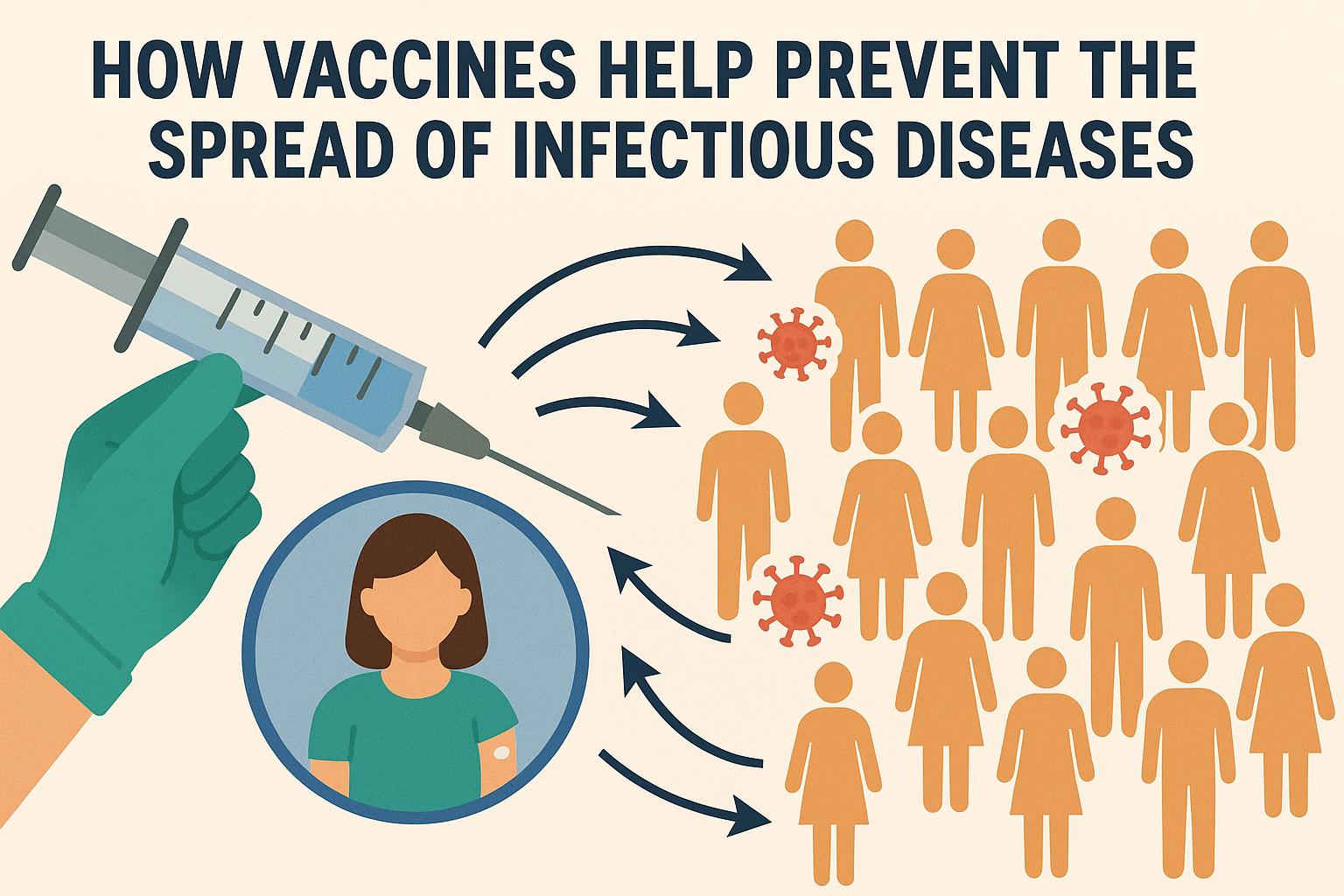
How vaccines help prevent the spread of infectious diseases.
Understanding Vaccines and Their Function
Vaccines are crucial components in the prevention of infectious diseases, serving as biological preparations that shield individuals from illnesses caused by both viruses and bacteria. Their function primarily involves activating the body’s immune system to identify and counteract specific pathogens, thereby offering immunity without causing the actual disease. This is achieved by introducing an agent into the body that resembles the disease-causing microorganism, which stimulates the immune system to respond in such a way that the body is prepared to defend itself against the real pathogen should exposure occur in the future.
Mechanism of Action
The principle of vaccination is grounded in the use of antigens, which are essentially fragments of the pathogen such as proteins or sugars. While these antigens are harmless on their own, they possess the capability to initiate an immune response. Vaccines, therefore, function by enabling the immune system to “remember” the pathogen. This memory allows the immune system to swiftly activate and produce antibodies—specialized proteins that target and neutralize the pathogen—if the individual later encounters the infectious agent, thereby preventing the illness from developing.
Types of Vaccines
Various types of vaccines have been tailored to combat different infectious agents, utilizing different methodologies that cater to specific diseases. Key types of vaccines include:
Inactivated Vaccines: These vaccines consist of pathogens that have been killed or inactivated. Despite being non-viable, these pathogens can still provoke a strong enough immune response to confer protection. Inactivated vaccines typically require multiple doses to achieve enduring immunity. Notable examples include vaccines for polio and hepatitis A.
Live-attenuated Vaccines: These vaccines incorporate a weakened form of the pathogen, which is potent enough to create a sustained immune response without causing the full-blown disease in healthy individuals. The measles, mumps, and rubella (MMR) vaccine exemplifies this category. Live-attenuated vaccines generally provide long-lasting immunity with fewer doses, but they may not be suitable for individuals with compromised immune systems.
Subunit, Recombinant, Polysaccharide, and Conjugate Vaccines: This category includes vaccines that use only specific pieces of the pathogen, such as proteins or capsids. The HPV (human papillomavirus) and pneumococcal vaccines belong here. These vaccines can be utilized to trigger strong immune responses even in the absence of live or whole pathogens.
mRNA Vaccines: An innovative advancement in vaccine technology, mRNA vaccines utilize messenger RNA to prompt cells to produce a protein that, in turn, triggers an immune response. The COVID-19 vaccines developed by Pfizer-BioNTech and Moderna exemplify the application of this technology. mRNA vaccines have been pivotal in rapid vaccine development, offering flexibility and efficacy.
Role in Herd Immunity
Vaccinations significantly contribute to establishing herd immunity, an indirect form of defense from infectious diseases. Herd immunity is achieved when a substantial proportion of the population becomes immune to an infection, thereby curbing its propagation. By doing so, vaccines protect not just the individuals who receive them but also safeguard those who cannot be immunized for reasons such as allergies or medical conditions, as the spread of the infection is mitigated. This community-level protection is critical to maintaining public health.
The Impact on Disease Eradication
Vaccines have played a pivotal role in the considerable reduction and, in certain instances, complete eradication of infectious diseases worldwide. A quintessential example of this success is the global eradication of smallpox, a milestone achieved through comprehensive vaccination efforts. Similarly, polio has been largely eradicated in many parts of the world due to persistent vaccination campaigns, although efforts continue in certain regions to achieve complete eradication. These examples highlight the instrumental role that vaccines play in advancing global public health and underscore the importance of sustained vaccination campaigns.
Continued Importance in Public Health
In the contemporary world, the relevance of vaccines extends beyond the containment of historical diseases. New and emerging infectious threats require equally dynamic and adaptive vaccine responses. Vaccine research and development are ongoing processes that respond to evolving microbial threats, ensuring that protective measures keep pace with the ever-changing landscape of infectious diseases.
Conclusion
In summary, vaccines are an essential tool for the prevention and control of infectious diseases. By enhancing individual immunity, they reduce infection risk and contribute to mortality reduction. Meanwhile, they bolster herd immunity, offering protection at the community level, especially to those who cannot be vaccinated. The success of vaccination campaigns in reducing the incidence of numerous infectious diseases reaffirms the importance of vaccines in modern medicine and public health policies. Continuous research and innovative advancements in vaccine technologies will continue to play a pivotal role in combating both existing and emerging infectious challenges.