
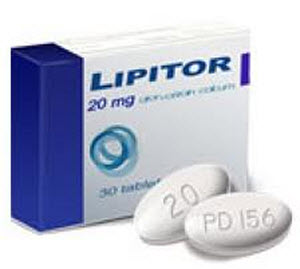
Common Uses: This medicine is an HMG-CoA reductase inhibitor (also known as a "statin") used to lower cholesterol and triglyceride levels in your blood. It may also be used to treat other conditions as determined by your doctor.
Generic Name: E: ATORVASTATIN (a-TORE-va-sta-tin)
[Lipitor]. Medications should only be taken in accordance with the advice of your medical professional.
Buy
Drugs Online Without Prescription - Click Here!
More about Lipitor :
How to use this Medicine: Follow the directions for using this medicine provided by your doctor. This medicine may be taken on an empty stomach or with food. Try to take this medicine at the same time each day. Dosage is based on your medical condition, response to therapy, and use of certain interacting medicines. Consult your doctor or pharmacist for more details, since many of the medicines listed in the Before Using section may increase the chances of muscle injury when used with this medicine. AVOID EATING GRAPEFRUIT OR DRINKING GRAPEFRUIT JUICE while taking this medicine. STORE THIS MEDICINE at room temperature between 68 to 77 degrees F (20 to 25 degrees C) in a tightly-closed container, away from heat and light. IF YOU MISS A DOSE OF THIS MEDICINE, take it as soon as possible. If it is almost time for your next dose, skip the missed dose and go back to your regular dosing schedule. Do NOT take 2 doses at once.
Mexican name is Lipitor
Cautions: FOLLOW THE DIETARY PLAN provided by your doctor. IT MAY TAKE UP TO 2 WEEKS before the full benefits of this medicine takes effect. IT IS IMPORTANT TO CONTINUE TAKING THIS MEDICINE even if you feel well. Most people with high cholesterol or triglycerides do not feel sick. KEEP ALL DOCTOR AND LABORATORY APPOINTMENTS (e.g., liver function tests, blood cholesterol levels) while you are using this medicine. THIS DRUG MAY CAUSE DIZZINESS. DO NOT DRIVE, OPERATE MACHINERY, OR DO ANYTHING ELSE THAT COULD BE DANGEROUS until you know how you react to this medicine. Using this medicine alone, with other medicines, or with alcohol, may lessen your ability to drive or to perform other potentially dangerous tasks. DAILY USE OF ALCOHOL may increase your chance for serious side effects. Limit alcoholic beverages. BEFORE HAVING ANY KIND OF SURGERY, tell your doctor that you are taking this medicine. BEFORE YOU BEGIN TAKING ANY NEW MEDICINE, either prescription or over-the-counter, check with your doctor or pharmacist. CAUTION IS ADVISED WHEN USING THIS MEDICINE IN THE ELDERLY because they may be more sensitive to the side effects of the drug. FOR WOMEN: DO NOT USE THIS MEDICINE if you are pregnant. IF YOU SUSPECT THAT YOU COULD BE PREGNANT, contact your doctor immediately. It is recommended that women of child-bearing age use effective birth control measures while taking this medicine, since it may cause fetal harm. THIS MEDICINE IS EXCRETED IN BREAST MILK. DO NOT BREAST-FEED while taking this medicine.
Possible Side Effects: SIDE EFFECTS that may occur while taking this medicine include dizziness, headache, nausea, diarrhea, constipation, gas, or stomach upset/pain. If it continues or is bothersome, check with your doctor. THIS MEDICINE MAY INFREQUENTLY cause muscle damage (which can rarely lead to a very serious condition called rhabdomyolysis). Stop taking this drug and tell your doctor immediately if you develop muscle pain, tenderness, or weakness (especially with fever or unusual tiredness). CHECK WITH YOUR DOCTOR AS SOON AS POSSIBLE if you experience joint pain, chest pain, or swelling in the arms or legs. CONTACT YOUR DOCTOR IMMEDIATELY if you experience yellowing eyes and skin, dark urine, change in the amount of urine, black stool, or severe stomach pain. IF YOU EXPERIENCE difficulty breathing; tightness of chest; swelling of eyelids, face, or lips; or if you develop a rash or hives, tell your doctor immediately. Do not take any more doses of this medicine unless your doctor tells you to do so. If you notice other effects not listed above, contact your doctor, nurse, or pharmacist.
40 mg 21 tablets
10 mg 60 tablets
20 mg 30 tablets

For years, Americans living near Canada and Mexico have taken advantage of the low cost prescription drugs available across the border, allowing them to purchase brand name and generic medicines like Lipitor at
substantial savings compare to prices in the United States. You must only take medications in accordance with the advice of your doctor or medical professional and you must only take prescription drugs if you are in possession of a valid prescription.
[Lipitor]
MedSupport.org makes no endorsements, representations or warranties regarding any services or products offered at any online pharmacies.

< Previous
Next > | Back
to Index

|
|
Drug interactions with over-the-counter
cough medicines : There are two general types of cough medicine that are available
over the counter. (There are also some types of cough medicines with significant
amounts of narcotics like codeine, but these stronger cough medicines are only
available by prescription.) Some over-the counter cough medicines are antitussives.
Dextromethorphan is one of the more common ingredients in antitussives. An antitussive
is a cough suppressant. It works by partially blocking the cough reflex. It
lessens your body’s tendency to allow a cough to be triggered involuntarily.
Some common antitussive over-the-counter cough medicines include Triaminic Cold
and Cough, and Vicks 44 Cough and Cold.
The other type of over-the-counter cough medicine is an expectorant. The main
ingredient for over-the-counter expectorants is guaifenesin. Expectorants work
by thinning the mucus that can clog your airway and cause you to cough to clear
it. Some common expectorant over-the-counter cough medicines include Mucinex
and Robitussin Chest Congestion. With any medication, including fairly tame
over-the-counter medications, you always want to be aware of the risk of it
interacting adversely with some other medication - over-the-counter or prescription
- that you are taking. In the case of over-the-counter cough medicine, the primary
risk is consuming too much of an ingredient because you’re not aware it’s in
multiple medications you’re taking. This happens most often because some products
are designed to treat multiple symptoms of, say, a cold. So you need to read
your labels and check the ingredients.
For instance, you may be taking something you think
of as a cough medicine, when in fact if you look closely you’ll see that it
treats other symptoms as well. Then if you’re also taking something else for
those other symptoms, you could be inadvertently doubling up. You might be taking,
say, an antihistamine, a decongestant, and/or a pain reliever, and if one or
more of these is also contained in your cough medicine, then you may exceed
the recommended dose. Or, your cough medicine may indeed be solely a cough medicine,
but you may be also taking a general cold remedy which itself contains cough
medicine, thus exceeding the recommended dosage in that way. Beyond that, there
is a small risk of an over-the-counter cough medicine interacting adversely
with certain prescription drugs. If you are on any prescription medications,
always ask your doctor before taking cough medicine, or any other medication.
Specifically, some patients taking a monoamine oxidase inhibitor (MAOI), a prescription
drug used to treat depression among other conditions, have had problematic interactions
with over-the-counter cough medicines. |